

Blood Sugar Log Tracker – Record Glucose Readings and See Your Range
Blood Sugar Tracker
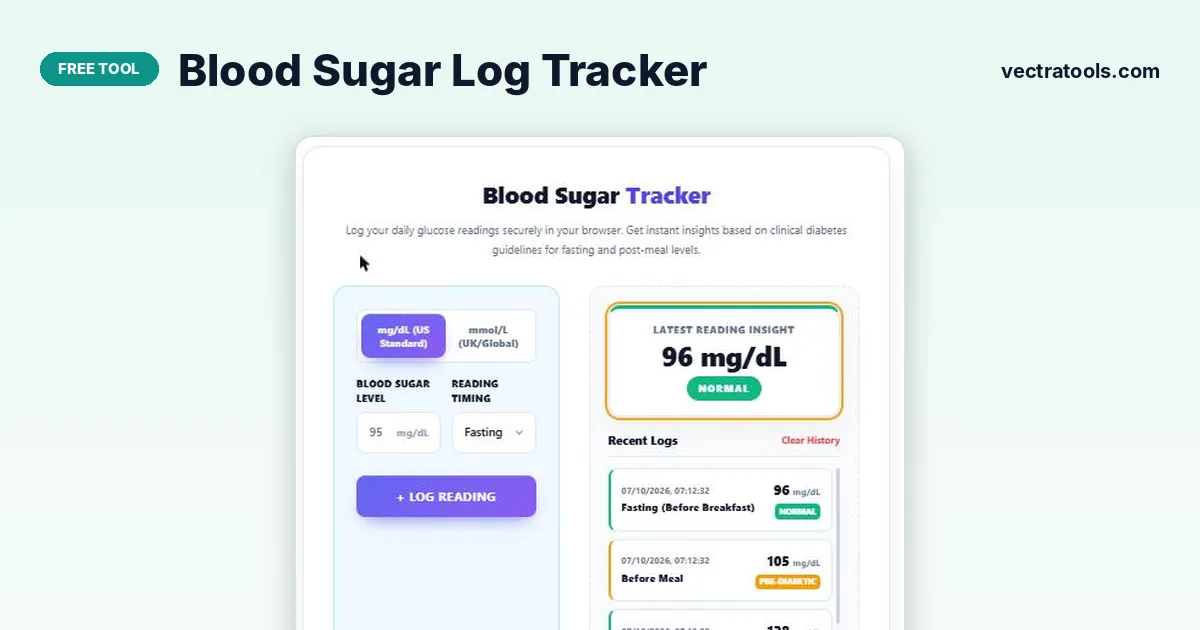
Use this blood sugar log tracker to record your daily glucose readings securely in your browser. Get instant insights based on clinical diabetes guidelines for fasting and post-meal levels.
Quick answer
A blood sugar log tracker lets you record glucose readings and see at a glance whether each one is in range. Choose mg/dL or mmol/L, enter your reading, pick when you took it (fasting, before a meal, 2 hours after a meal or random) and click Log Reading. The tool labels the reading as Low, Normal, Pre-diabetic or High and keeps your last 20 readings in your browser.
Our free blood sugar log tracker is a simple digital logbook for people who check their glucose at home with a meter. Readings are saved only in your own browser using local storage, so they stay private and are not uploaded anywhere. Clearing your browser data or using another device will not show the same history.
This blood sugar log tracker is a record-keeping aid, not a diagnostic or treatment tool. Diabetes can only be diagnosed by a healthcare professional using laboratory tests. If you have diabetes, follow the targets your care team has set for you, which may differ from the general ranges below.
Blood Sugar Ranges Used by the Tracker
| Timing | Low | Normal | Pre-diabetic range | High |
|---|---|---|---|---|
| Fasting or before a meal | Under 70 mg/dL (3.9 mmol/L) | 70 to 99 mg/dL | 100 to 125 mg/dL | 126 mg/dL (7.0 mmol/L) or more |
| 2 hours after a meal or random | Under 70 mg/dL | 70 to 140 mg/dL | 141 to 199 mg/dL | 200 mg/dL (11.1 mmol/L) or more |
To convert mg/dL to mmol/L, divide by 18. For example, 99 mg/dL is about 5.5 mmol/L and 126 mg/dL is 7.0 mmol/L.
How to Use the Blood Sugar Log Tracker
Here is how to log a reading in the blood sugar log tracker.
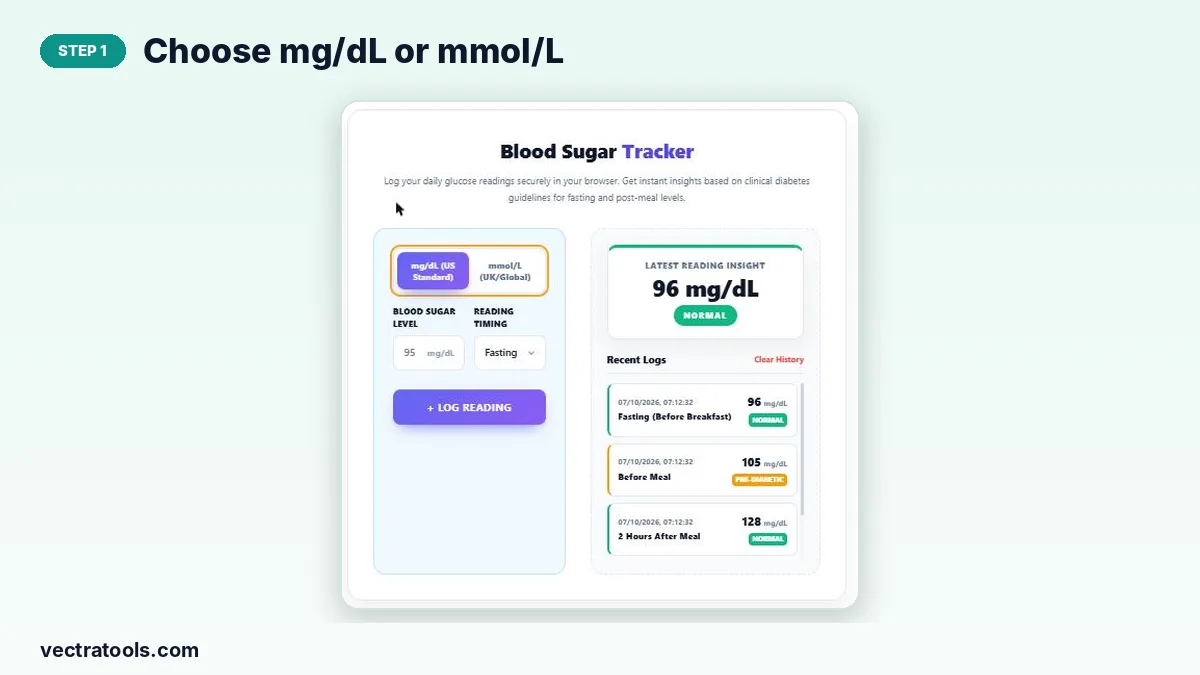
Step 1: Choose mg/dL or mmol/L
Select mg/dL (common in the US) or mmol/L (common in the UK, Pakistan, India and many other countries) to match your meter.
Step 2: Enter Your Reading and When You Took It
Type the number from your meter and choose the timing: Fasting, Before Meal, 2 Hours After Meal or Random / Bedtime.

Step 3: Log It and Read the Instant Insight
Click Log Reading. The Latest Reading Insight card shows your value and a coloured label such as Normal or Pre-diabetic.

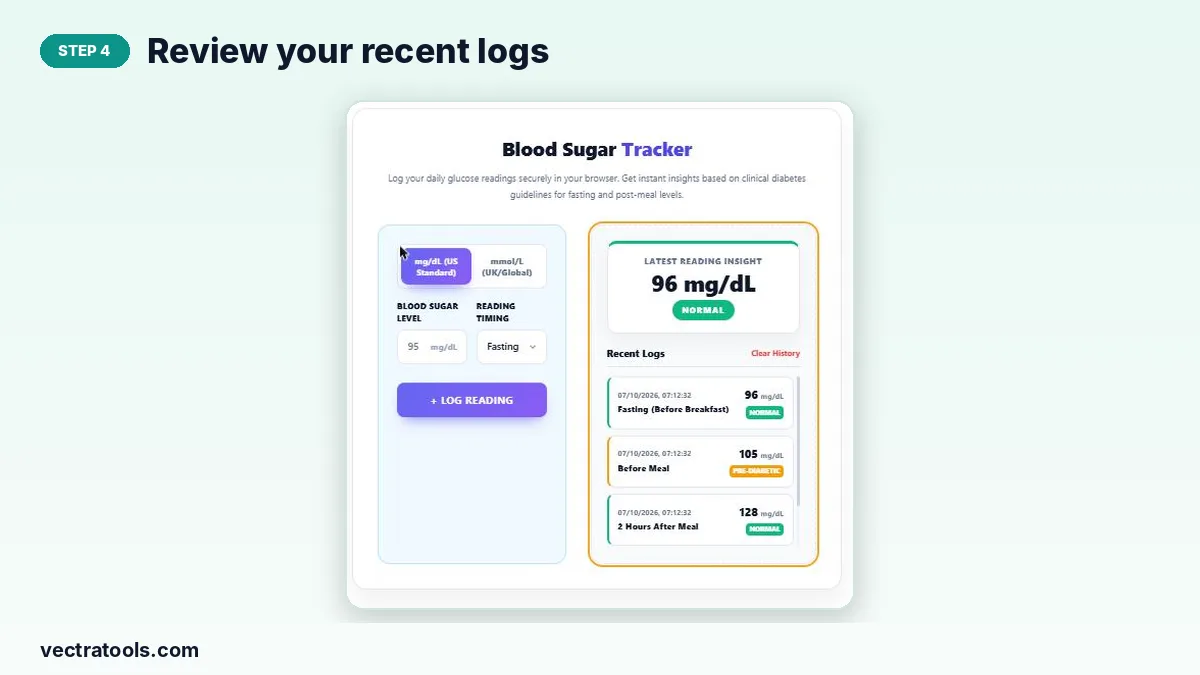
Step 4: Review Your Recent Logs
Every reading is added to Recent Logs with the date, time, timing and label. The tracker keeps your last 20 readings; use Clear History to start over.
Tips for Accurate Blood Sugar Readings
- Wash and dry your hands before testing; sugar on your fingers can raise the result.
- Use test strips that are in date and stored correctly.
- Test at consistent times so readings can be compared fairly.
- Note meals, exercise, illness and medication changes alongside unusual results.
When to Get Medical Help
- A reading below 70 mg/dL (3.9 mmol/L) with shaking, sweating or confusion: treat a low as advised by your care team.
- Repeated readings above 250 mg/dL (13.9 mmol/L), especially with vomiting or drowsiness.
- Fasting readings that are often 100 mg/dL or higher if you have not been diagnosed; ask your doctor about testing.
Why Use a Blood Sugar Log Tracker?
Patterns matter more than single numbers. A blood sugar log tracker makes patterns easier to spot, such as higher readings after certain meals or in the morning. Bringing your log to appointments helps your doctor or diabetes educator make better decisions about your care.
Frequently Asked Questions
Is this blood sugar log tracker free?
Yes. It is free and needs no account.
Where are my readings stored?
Only in your browser’s local storage on this device. They are not sent to any server.
What is a normal fasting blood sugar?
Generally 70 to 99 mg/dL (3.9 to 5.5 mmol/L) for people without diabetes.
What is normal 2 hours after eating?
Generally below 140 mg/dL (7.8 mmol/L) for people without diabetes.
How do I convert mg/dL to mmol/L?
Divide the mg/dL value by 18. Multiply mmol/L by 18 to go the other way.
Can this tracker diagnose diabetes?
No. Only a healthcare professional can diagnose diabetes using laboratory tests.