

Blood Pressure Chart by Age – Check Your Reading and Category
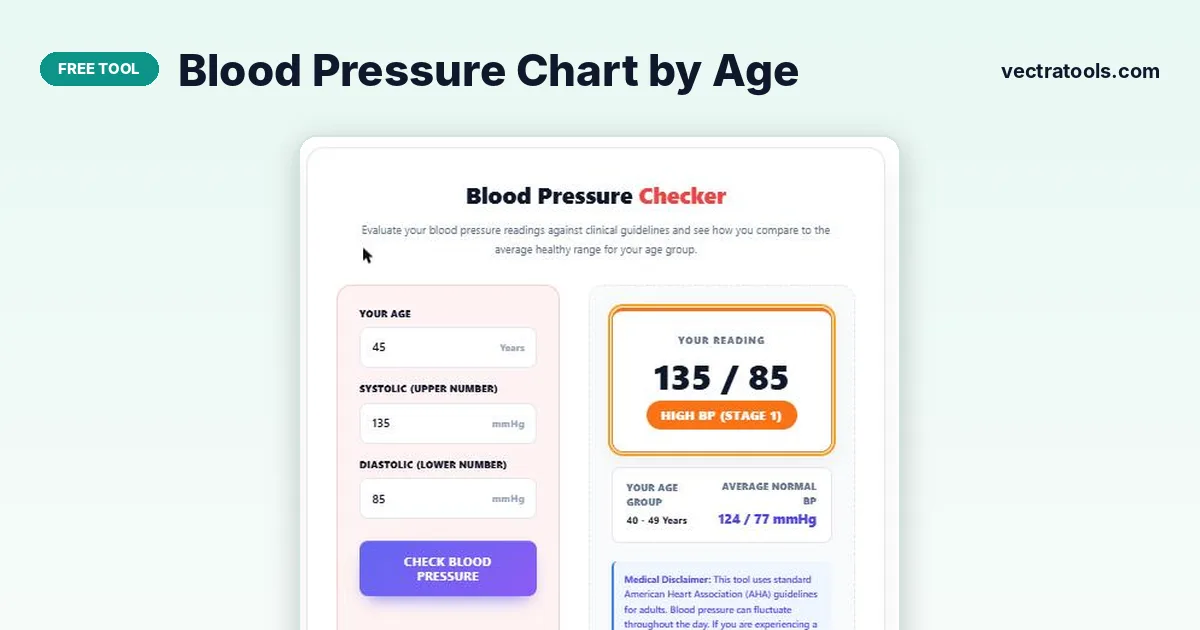
Blood Pressure Checker
Use this blood pressure chart by age to check your readings against clinical guidelines and see how you compare to the average healthy range for your age group.
Quick answer
A blood pressure chart by age shows what readings are typical for different age groups and which numbers count as normal, elevated or high. Enter your age, your systolic (top) and diastolic (bottom) numbers and click Check Blood Pressure. The tool shows your category using American Heart Association (AHA) guidelines and the average normal reading for your age group.
Our free blood pressure chart by age combines two things in one place: a checker that classifies your own reading, and age-group averages so you can see how you compare with people your age. It works in your browser and does not store your readings.
This tool is for information, not diagnosis. Blood pressure changes through the day, so one reading is not enough to confirm high or low blood pressure. If your reading is above 180/120 mmHg, or you have chest pain, shortness of breath, weakness, vision changes or difficulty speaking, call emergency services immediately.
Blood Pressure Categories (AHA)
| Category | Systolic (mmHg) | Diastolic (mmHg) | |
|---|---|---|---|
| Normal | Less than 120 | and | Less than 80 |
| Elevated | 120 to 129 | and | Less than 80 |
| High BP Stage 1 | 130 to 139 | or | 80 to 89 |
| High BP Stage 2 | 140 or higher | or | 90 or higher |
| Hypertensive crisis | Higher than 180 | and/or | Higher than 120 |
Readings below about 90/60 mmHg are often described as low blood pressure (hypotension). Low readings without symptoms can be normal for some people, but dizziness or fainting should be checked by a doctor.
Average Blood Pressure Chart by Age
| Age group | Average reading used by the tool |
|---|---|
| 18 to 39 years | 119/70 mmHg |
| 40 to 49 years | 124/77 mmHg |
| 50 to 59 years | 129/79 mmHg |
| 60 to 69 years | 133/69 mmHg |
| 70 years and over | 134/68 mmHg |
Systolic pressure tends to rise with age as arteries stiffen, while diastolic pressure often levels off or falls after about 60. Average does not mean ideal: for most adults the treatment target is still below 130/80 mmHg.
How to Use the Blood Pressure Chart by Age
Use the blood pressure chart by age and checker in four steps.
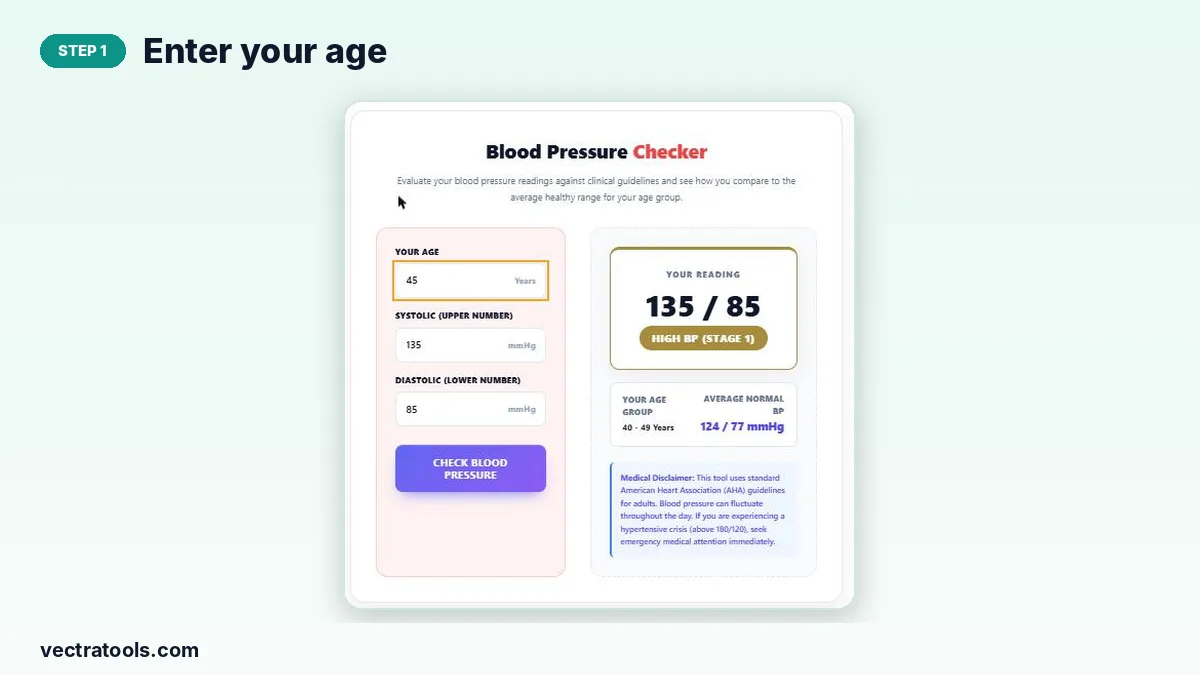
Step 1: Enter Your Age
Type your age in years. The tool uses it to find your age group for comparison.
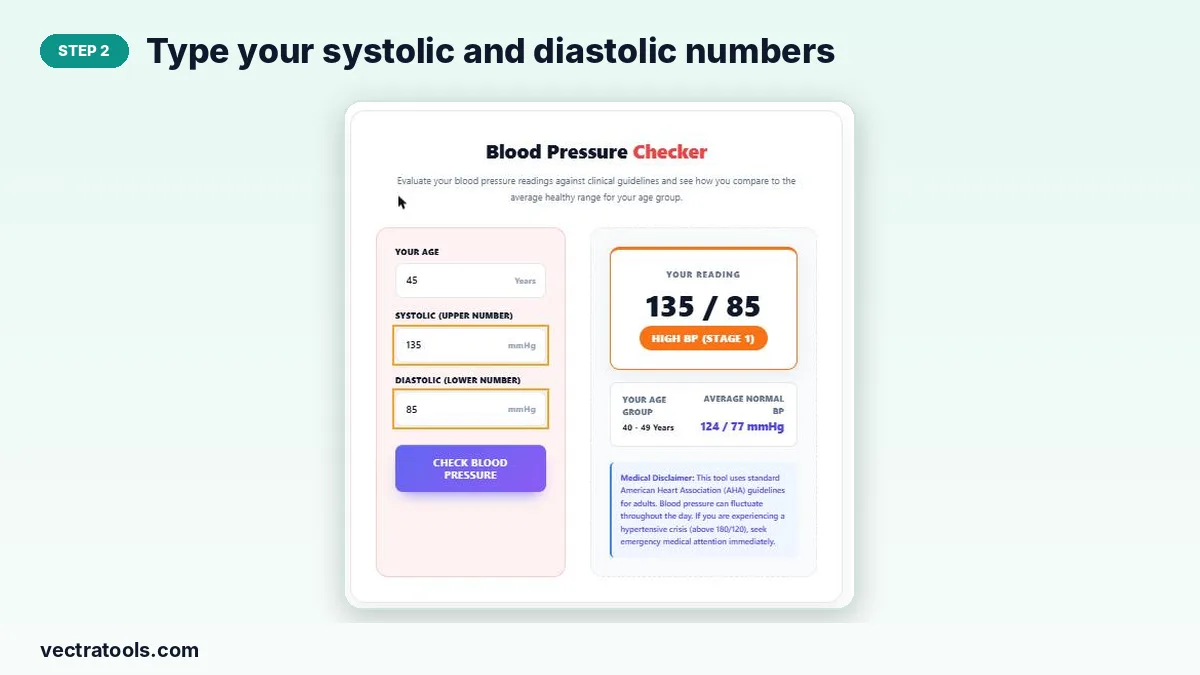
Step 2: Type Your Systolic and Diastolic Numbers
Enter the top number (systolic) and bottom number (diastolic) from your blood pressure monitor, for example 135 and 85.
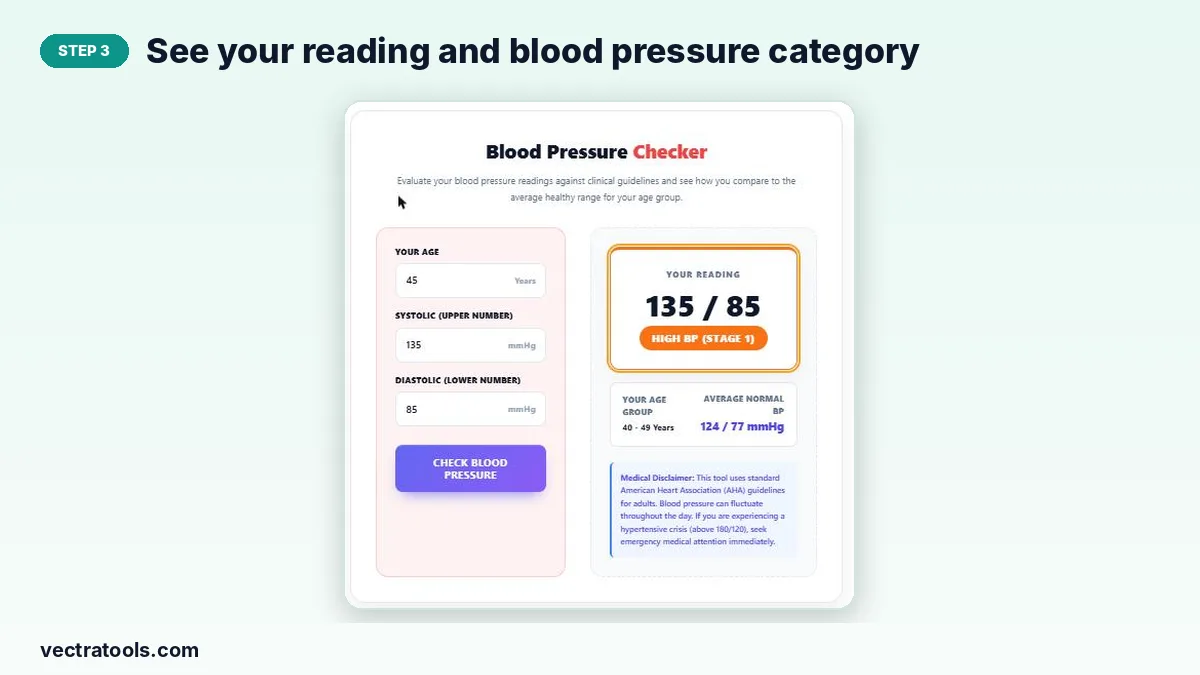
Step 3: See Your Reading and Blood Pressure Category
Click Check Blood Pressure. Your reading appears with a coloured label such as Normal, Elevated, High BP (Stage 1), High BP (Stage 2) or Hypertensive Crisis.
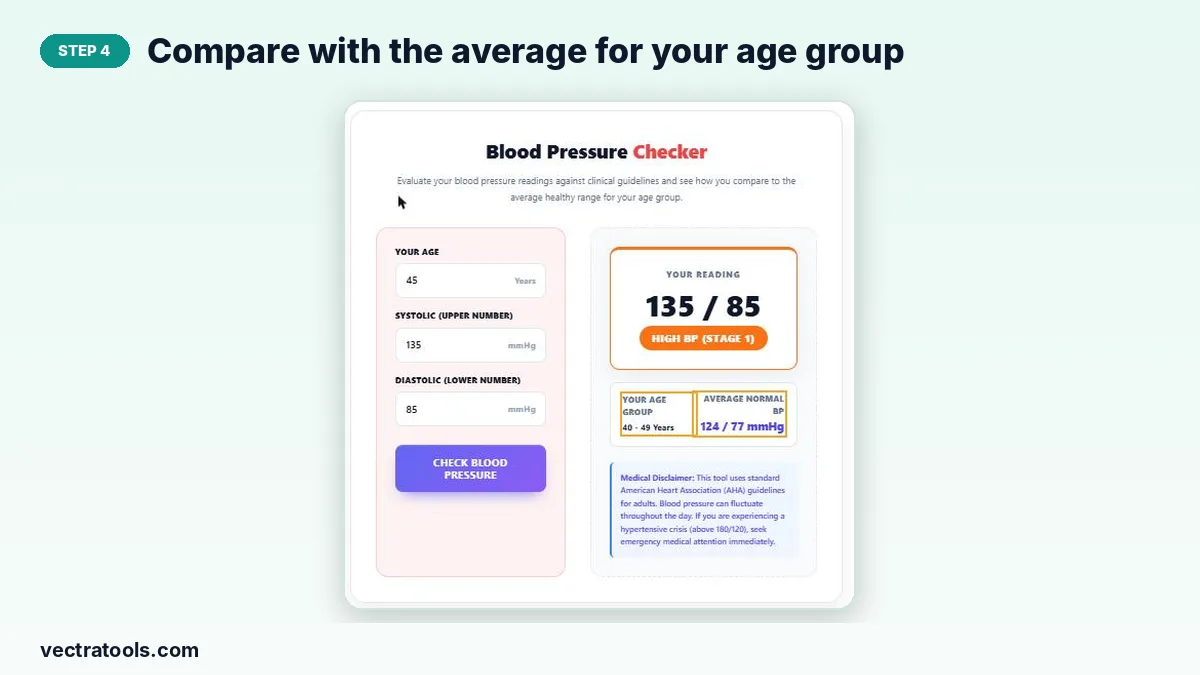
Step 4: Compare With the Average for Your Age Group
Below your result, see your age group and the average normal blood pressure for people your age.
How to Measure Blood Pressure Correctly
- Sit quietly for 5 minutes before measuring, with your back supported and feet flat.
- Rest your arm on a table at heart level and use the right cuff size.
- Avoid caffeine, exercise and smoking for 30 minutes before.
- Take two readings one minute apart and record the average.
- Measure at the same times each day for a week before drawing conclusions.
Ways to Support Healthy Blood Pressure
- Reduce salt and processed food.
- Eat more vegetables, fruit, whole grains and low-fat dairy.
- Aim for at least 150 minutes of moderate activity a week.
- Limit alcohol and stop smoking.
- Manage weight, stress and sleep.
Lifestyle changes help many people, but some need medication. Never stop or change blood pressure medicine without speaking to your doctor.
Why Use a Blood Pressure Chart by Age?
Numbers from a home monitor can be confusing. A blood pressure chart by age turns them into a clear category and puts them in context with your age group, so you know when a reading is fine, when to keep monitoring and when to book an appointment.
Frequently Asked Questions
Is this blood pressure chart by age free?
Yes. It is free and your readings are not stored.
What is a normal blood pressure?
For adults, normal is below 120 systolic and below 80 diastolic, according to AHA guidelines.
Does normal blood pressure change with age?
Average readings rise with age, especially systolic pressure, but the healthy target for most adults stays below 130/80 mmHg.
Which number is more important?
Both matter. After about age 50, a high systolic number is a particularly important risk factor.
What should I do if my reading is above 180/120?
Wait a few minutes and measure again. If it is still that high, or you have symptoms such as chest pain or weakness, seek emergency care.
Can this tool diagnose high blood pressure?
No. Diagnosis needs several readings over time and a healthcare professional.